Description
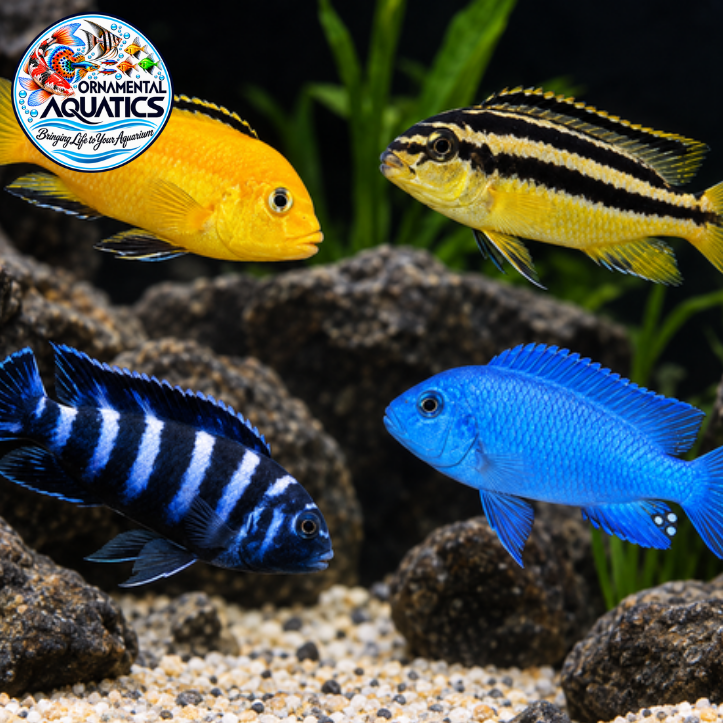
Malawi Cichlids – Various Species
Malawi Cichlids are popular freshwater aquarium fish known for their vibrant colours, fascinating behaviour and territorial personalities. Native to Lake Malawi in Africa, these fish come in a wide variety of species, displaying beautiful shades of blue, yellow, orange and black.
Malawi Cichlids are best suited to aquariums designed around their specific water requirements and social behaviour. With the right setup, filtration and diet, they can make a stunning addition to a dedicated cichlid aquarium.
Malawi Cichlid Care Guide
Temperature: 24–28°C
Minimum Tank Size: 150+ litres, depending on species and stocking
Adult Size: Up to 15 cm, depending on species
Lifespan: 5–10 years
Suitable for Community Tanks: Yes, with compatible cichlids
Ideal Tank Conditions
Malawi Cichlids thrive in stable water conditions with temperatures between 24–28°C and a pH level of approximately 7.6–8.6. They prefer hard, alkaline water with low to moderate nitrate levels.
A sandy substrate combined with plenty of rocks, caves and hiding places helps recreate their natural environment. These structures also provide shelter and help establish territories, reducing aggression between fish.
Strong filtration is essential, as cichlids can produce a significant amount of waste. Regular partial water changes and routine water testing will help maintain excellent water quality.
A minimum tank size of 150 litres may suit some smaller species, but larger aquariums are often necessary for bigger species or mixed cichlid setups.
Suitable Tank Mates
Malawi Cichlids are generally best kept with compatible Malawi Cichlids that have similar adult sizes, temperaments and water requirements.
Potential tank mates include:
- Mbuna Cichlids
- Peacock Cichlids
- Haplochromis (Hap) Cichlids
- Other compatible Malawi Cichlid species
Compatibility varies significantly between species. Some cichlids are highly territorial, so avoid mixing fish with very different temperaments or keeping overly aggressive species together.
Non-cichlid fish may be bullied or injured and are generally not recommended for typical Malawi Cichlid setups.
Provide plenty of rocks and caves to establish territories, and monitor the aquarium for signs of persistent aggression.
Feeding Your Malawi Cichlids
Malawi Cichlids benefit from a varied diet, but their nutritional requirements depend on the species. Some are primarily herbivorous, while others require more protein.
Suitable food options include:
- High-quality cichlid flakes or pellets
- Spirulina-based foods for herbivorous species
- Suitable frozen foods, such as brine shrimp and daphnia
- Occasional bloodworms for species that can safely tolerate them
- Appropriate vegetable matter, such as spirulina and peas
Feed small portions two to three times daily, adjusting the amount and frequency to suit the species. Avoid overfeeding, as excess food can quickly affect water quality.
Important: Mbuna species, in particular, often require a predominantly plant-based diet. Excessive protein-rich foods can contribute to digestive problems, so always choose food according to the species you keep.
General Care Tips
- Maintain a stable temperature between 24–28°C.
- Keep the water hard and alkaline, with a suitable pH.
- Provide strong filtration and regular partial water changes.
- Use rocks and caves to create hiding places and territories.
- Research the temperament and adult size of each species before mixing them.
- Feed a balanced diet suited to each species’ nutritional needs.
- Monitor fish behaviour and separate individuals if serious aggression occurs.
Reviews
There are no reviews yet.