Description
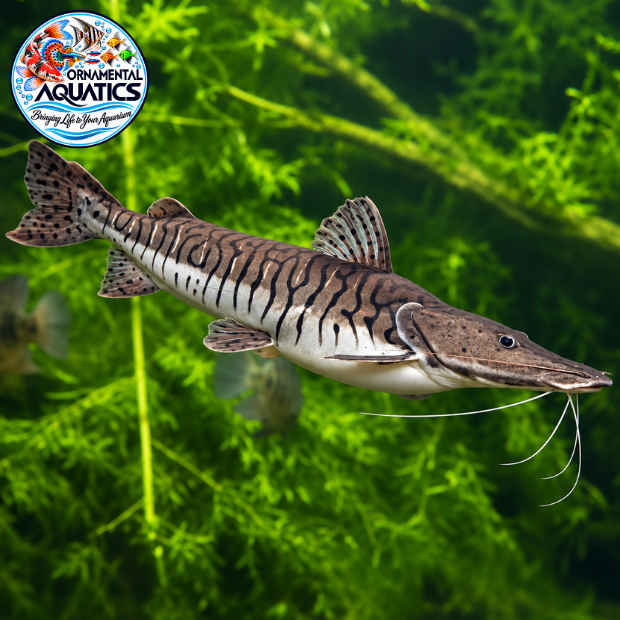
Tiger Shovelnose Catfish (Pseudoplatystoma fasciatum)
The Tiger Shovelnose Catfish is a striking, large freshwater predator known for its distinctive dark tiger-like markings, long whiskers and flattened, shovel-shaped snout. These impressive fish are highly active and grow very large, making them suitable only for experienced aquarists with spacious, well-maintained aquariums.
Care Requirements
-
Temperature: 23–28°C
-
Minimum Tank Size: 300 litres for juveniles; adults require a much larger aquarium
-
Adult Size: Up to 100 cm
-
Lifespan: 15+ years
-
Community Tank: No, best kept alone or with carefully selected, very large tank mates
Ideal Tank Conditions
Tiger Shovelnose Catfish require a large aquarium with plenty of open swimming space and strong, efficient filtration. They thrive in stable water conditions with temperatures between 23–28°C and a pH of 6.3–8.0.
These fish produce a significant amount of waste, so powerful filtration, good oxygenation and regular water changes are essential to maintain healthy water quality.
Provide a spacious aquarium with sturdy driftwood, rocks or caves for shelter. Avoid sharp decorations that could damage their sensitive skin and whiskers.
Important: Although juveniles may be kept temporarily in smaller aquariums, they grow rapidly and eventually require an exceptionally large aquarium or purpose-built pond. A 300-litre tank is not suitable for an adult.
Tank Mates
Tiger Shovelnose Catfish are large, predatory fish that are best kept alone. They will readily eat smaller fish that fit into their mouths.
If kept with other fish, tank mates must be very large, robust and compatible with their requirements. Suitable companions may include:
-
Large Doradid Catfish
-
Large, non-aggressive Cichlids
-
Other suitably sized large freshwater fish
Avoid keeping them with small fish, shrimp or other delicate species, as these may become prey.
They are generally best kept as a single specimen unless housed in an exceptionally large, carefully planned setup.
Feeding
Tiger Shovelnose Catfish are carnivorous predators and require a protein-rich, varied diet.
Offer a combination of:
-
High-quality carnivore or sinking predator pellets
-
Fish fillets
-
Prawns and shrimp
-
Mussels and squid
-
Other suitable seafood
Feed juveniles more frequently, while adults can be fed 2–3 times per week depending on their size and condition.
Avoid feeding mammalian or avian meats such as beef or chicken, as these are not suitable for their long-term nutritional requirements.
Remove uneaten food promptly to prevent water quality from deteriorating.
*Please Note – Live Fish Variations*
Fish may naturally vary in colour, markings, size, age and sex. Product photographs are representative of the species and do not guarantee an exact match. Unless individual selection is specifically offered, fish are selected by Ornamental Aquatics based on availability, health and species-specific requirements. Where applicable, we aim to provide suitable male-to-female ratios and group compositions, although exact ratios cannot be guaranteed for species that cannot be reliably sexed.
By purchasing, you acknowledge and accept these natural variations. All purchases remain subject to our Live Fish Terms & Conditions and applicable consumer-protection legislation.
Reviews
There are no reviews yet.